Eilat Summary

Coral Reefs are apparently one of earths most diverse ecosystems, but how can they be if they are rapidly disappearing? Israeli scientists have found that one coral reef is withstanding the well known killer, coral bleaching. The Eilat reef in the Red Sea has overcome the coral bleaching epidemic. Coral bleaching occurs when the ocean temperature rises and kills off the reef. However, the Eilat reef must truly have a high biodiversity because it is withstanding the heat. It would be interesting to study the properties of the reef and try to replicate them in other areas where coral reefs have been wiped out.

"Eilat's Corals Stand Better Chance of Resilience Than Other Sites"


"Sep. 29, 2013 — Israel's southern Red Sea resort of Eilat, one of whose prime attractions is its colorful and multi-shaped underwater coral reefs, may have a clear advantage in the future over rival coral-viewing sites around the world, scientists at the Hebrew University of Jerusalem and Bar-Ilan University have found.

 
Coral reefs, earth's richest and most diverse ecosystem, are deteriorating rapidly. One of the most devastating causes for that deterioration is coral bleaching, which typically occurs when seawater temperatures exceed the local summer maximum by one-half to one and half degrees Celsius. At those higher temperatures, the coral's symbiotic algae are lost, leading to the coral's bleaching and eventually its death.
But, while the frequency of coral bleaching is globally increasing, no bleaching event has been observed in the Gulf of Eilat/Aqaba (Eilat sits at the northern end of the gulf), even when nominally bleaching conditions prevail.
The Israeli scientists explain the enigmatic lack of bleaching in the Gulf by the existence of a "warm-water barrier" at the southern Red Sea, allowing only heat-tolerant genotypes of corals to enter the Red Sea from the Gulf of Aden. This occurred following the disappearance of corals from the Red Sea during the last glacial period, some 15,000 years ago. The scientists predict that no bleaching is likely to occur in the Gulf of Eilat/Aqaba in the next 100 years, making it a unique refuge for coral reefs in the world's warming oceans.
The findings of the Israeli researchers, entitled "A Coral Reef Refuge in the Red Sea," was published on Sept. 23 in the journal Global Change Biology." The paper is the outcome of a joint study by Prof. Amatzia Genin of the Alexander Silberman Institute of Life Sciences at the Hebrew University; Dr. Hezi Gildor of the The Fredy & Nadine Herrmann Institute of Earth Sciences at the Hebrew University; and Dr. Maoz Fine of the Mina and Everard Goodman Faculty of Life Sciences at Bar-Ilan University. The work was carried out at the Interuniversity Institute for Marine Sciences in Eilat." (http://www.sciencedaily.com/releases/2013/09/130929142700.htm)

Summary of whale earwax

Scientists have been able to look at different events in the ocean through a whale earwax. They can look at time periods and understand the correlation between certain events that have penetrated the ocean. In some cases, they found chemicals that had been outlawed many years before a specific whale was born. These tests show the lasting impact that chemicals have on the biosphere of the ocean. This method is also a lot more effective than collecting blood and poop, it is more accurate.

Blue Whale Earwax Reveals Pollution Accumulated Over a Lifetime

September 16, 2013

"Blue Whale Earwax Reveals Pollution Accumulated Over a Lifetime


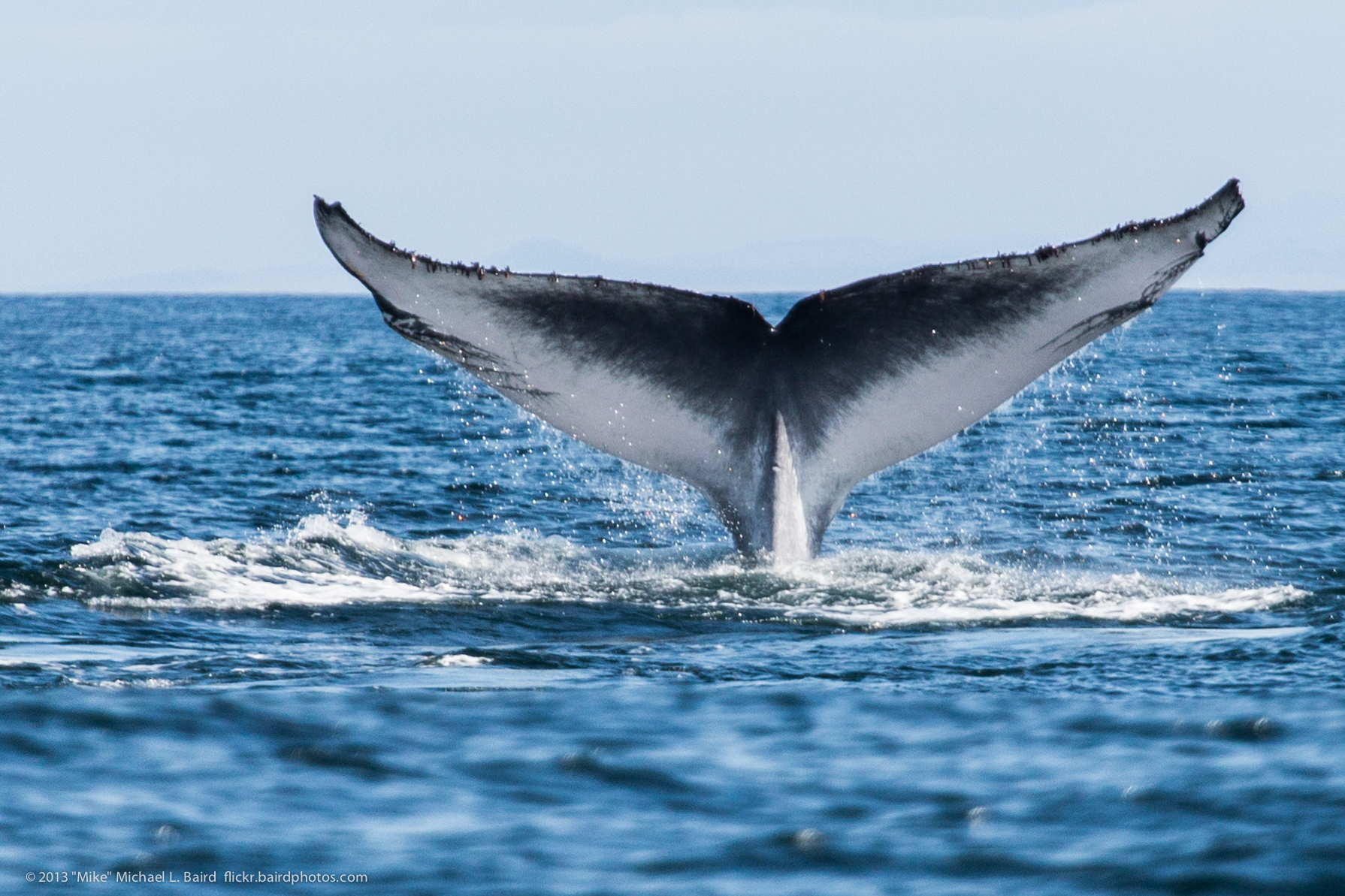
Blue whale earplugs can reveal some of these aquatic giants’ life events. Photo by Flickr user Mike Baird
If you think extracting globs of earwax from your own ear is gross, imagine handling a nearly foot-long, inch-thick tube of whale earwax.
To protect delicate eardrums, around 8 to 10 baleen whale species have ear canals that are naturally sealed off from the external environment. Over the years, earwax begins to build in the narrow tubes. Whales don’t hear like humans–fat deposits in their jaw funnel low-frequency sound vibrations toward their eardrum, so the wax does not get in the way of their hearing.
By the end of a blue whale’s life, the wax forms a solid, permanent tube of what researchers refer to as an earplug in the animal’s ear canal. While most people would likely consider the prospect of handling this stuff rather off-putting, for scientists the earwax provides “unprecedented lifetime profile” of the animal, according to a new paper published in Proceedings of the National Academy of Sciences.
Like tree rings, layers found within whale earplugs are already used to help researchers estimate an animal’s age. In this new study, scientists guessed that the wax may have more secrets to tell.
Traces of events recorded from birth to death may leave their mark in the whale’s ear wax, they figured. Chemical pollutants, for example, are a problem for ocean creatures, included endangered blue whales. Many of these contaminants build up in whales’ fatty tissues, but fat offers no clues as to when a whale might have been exposed to those chemicals. Perhaps the earplug would.

The 12-year-old blue whale used in this study washed ashore in California after being killed by a ship strike. Photo by Michelle Berman- Kowalewskic, Santa Barbara Museum of Natural History

However, testing this hypothesis requires invasively getting at that golden substance–a difficult task while the whale is alive. But in 2007, a 12-year-old, 70-foot long blue whale washed ashore near Santa Barbara, dead from a ship strike. The recovered 10-inch long earplug sat in a freezer for a couple years, until the team sampled it. They also took samples of its blubber to compare it with the wax and get chemical profiles of these two lipid-rich materials’.
Earwax is continuously deposited throughout the whale’s lifetime, but forms alternating light and dark layers on approximately 6 month intervals. The light corresponds to periods in the whale’s lifecycle when it’s feeding, while the dark represents times of fasting and migration. The team performed numerous chemical analyses to produce a profile of the whale’s life, told at a 6-month resolution.
Within the wax, they found markers of the stress hormone cortisol, growth-inducing testosterone, contaminants such as pesticides and flame retardants, and mercury. Much like humans, this particular whale’s stress levels increased as it got older, effectively doubling over its lifetime. Testosterone peaked when the whale was about 10 years old–the height of puberty for male blue whales.
The contaminants tell an interesting story. From the whale’s birth until about 12 months old, anthropogenic chemicals such as dichlorodiphenyltrichloroethanes (better known as DDT), chlordanes, polychlorinated biphenyls (PCBs) and polybrominated diphenyl ethers appeared in his earwax. About 20 percent of the the whale’s total organic contaminants turned up during this first year, indicating that although the whale’s mom likely did a good job nursing her son, she also inadvertently transferred toxins to her baby during gestation and through her milk.
After the whale was weaned, the bulk of pollutants that built up in the whale’s body likely came from krill, it’s main food source. Blue whales can consume up to one ton of the little shrimp-like crustaceans each day, so small contaminants present in the tiny creatures can accumulate over time in the whale’s body. The contaminants also work their way into bodily secretions such as earwax.

Mercury, which gets into earwax the same way as the other pollutants, peaked in two separate events much later in life, first when the whale was about five years old and then again at about ten years old.
Both the organic pollutants and the mercury continued to accumulate throughout the whale’s lifetime, meaning that the older the whale became, the more pollutants built up in its ears. About 90 percent of these contaminants also turned up in the blubber, confirming that both blubber and earwax can be used as markers of exposure, but that earwax provides a method of tracking when exposure occurred.

The extracted whale earplug (B); a cross-section of the earplug (C); and a cross-section of the earplug magnified 20x to show the different waxy layers. Photo from Trumble et. al., PNAS
“DDT was banned 30 years before this animal was born, but it was still exposed to DDT over its entire lifetime,” study author Sascha Usenko of Baylor University pointed out in an interview. “It was exposed to both historical and current chemicals, like brominated flame retardants.”
Pollutants like DDT and mercury are known to cause a host of problems for animals, including developmental disorders and thyroid issues. While these findings don’t bode well for the health of the ocean’s creatures–especially endangered ones like the blue whale–the researchers are excited about using the chronically archived wad of wax to better understand the extent to which humans are tampering with marine fauna’s health. It also provides marine biologists with a new tool for studying of whale life events. “For a majority of the species on the planet, lifetime profiles such as these are simply unattainable,” the researchers write.
The team hints at the wax’s research possibilities. For example, they noticed that stress hormones began to rage after the whale went through testosterone-triggered puberty, indicating the big guy may have been flustered over competition and pressure to win a lady friend. On the other hand, some of the whale’s ever-growing stress may be due to accumulating pollutants, though this study only scratches the surface of that question. Large pulses of pollutants, like the mercury seen in this whale, may indicate that the animal came near a polluted shore (the coast of California in this case, perhaps) or was exposed to a major contamination event.
“To be able to scientifically measure chemicals that are not as persistent, such as hormones that degrade in the body, is outstanding,” Usenko said. “We can ask questions like ‘Do contaminants have impacts on changes in stress?’ and maybe do a better job at addressing those questions.”
Examining old museum specimens’ ear wax from the 1950s and onwards, the team thinks, may reveal significant changes to the ocean and its creatures’ health over the years. Additionally, the researchers have confirmed the method works on grey whales, and they suspect it should also apply to other species of baleen whales. “This innovative tool increases the feasibility of accurately assessing anthropogenic impact on everything from an individual organism to marine ecosystems,” they write.
The earplug is no doubt only beginning to reveal its secrets. In the meantime, whale researchers may celebrate over less of a need to handle whale blubber, poop and blood–up until now the conventional means of studying whale health, and probably even more unpleasant than handling a giant tube of years-old wax, even though the earplug does reportedly have a pungent fishy smell. “It’s not something you want to get on your clothes, it sticks around with you for a while,” Usenko said."


Source: http://blogs.smithsonianmag.com/science/2013/09/blue-whale-earwax-reveals-pollution-accumulated-over-a-lifetime/

Interactive meal decision

http://ocean.nationalgeographic.com/ocean/take-action/seafood-decision-guide/

interactive website

http://www.siemens.com/innovation/pool/features/siemens360/wind-power/index.html

OFFSHORE summary

The Siemens electrical company has taken their humble, offshore wind power tests to a full blown power industry. Wind power is a great alternative to burning natural resources and the large white structures are not an eyesore due to their location. However, the structures are very dangerous and expensive to install in the ocean. They need to find a way to make the power and expenses cheaper for the general public.

OFFSHORE


GREEN COLUMN
Wind Farms Take Root Out at Sea
By STANLEY REED
Published: August 21, 2013


BREMEN, Germany — In a warehouse district on the outskirts of Bremen in northwestern Germany is a big, well-lighted work space dominated by the massive top section of a wind turbine called a nacelle.

It is here that Siemens, the German power systems giant, trains new employees and gives refresher courses on how to work safely on modern windmills that can rise 90 meters, or about 300 feet, and weigh more than 100 tons.

On a hot August day, employees wearing hard hats and protective clothing were squeezing in and out of the multi-ton module, practicing evacuating injured colleagues using pulleys and harnesses.

The training center, which pushes through around 2,500 people a year, is fully booked these days because Siemens is staffing up as it fills orders for building and operating offshore and onshore wind farms. The center, which now has eight trainers, plans to add an additional one this year and next year.

“We have to keep hiring,” said Ralph Knödler, a trainer, because the wind business is getting “bigger and bigger.”

Although onshore wind is a larger business, offshore is growing faster, and the contracts often come with long-term maintenance deals, creating a need to recruit new service workers from the ranks of landlubbers.

The turbines are formidably expensive and tricky to install and maintain, but countries blessed with ample sea breezes, like Britain and Germany, are coming to view them as a major part of their efforts to curb the emissions of carbon dioxide and other greenhouse gases that scientists say contribute to climate change.

“If you want to do wind on a big scale with power plants based on wind, you need to go offshore,” said Michael Hannibal, chief of Siemens’s offshore wind business.

“Power plants” are the important words here. Wind farms are no longer engineering experiments or small pilot schemes. They have grown very large, to the point where they are of the same scale as gas- or coal-fired power stations.

The world’s largest wind facility, called the London Array, which uses Siemens equipment and cost almost $3 billion, was recently inaugurated off Britain’s east coast. With 630 megawatts of capacity, it is comparable to or bigger than conventional generators.

Far larger projects, like one called East Anglia, which might be more than 10 times the size of the London Array, are under discussion for off the British coast.

Siemens figures there are about 3.3 gigawatts of offshore wind power connected to the grid in Europe. That is similar in size to a large contemporary nuclear power station. The company also expects the global market to grow 20 percent a year for the next few years, but that will depend on many factors, including costs and government support.

Offshore wind has advantages beyond the presence of sea breezes. The seabed is relatively cheap real estate, and much larger wind farms can be built there than on land. The vast expanses available at sea allow economies of scale that may bring down costs.

In addition, sea-based wind farms are less likely to set off aesthetic or environmental objections than land-based ones. Although there is worry that their fast-turning rotors may put seabirds at risk, particularly on foggy days, and grumbling that the big white pinwheels spoil views, they are being placed farther and farther out to sea to partly quell the complaints.

Siemens acquired a foothold in the industry by buying the Danish company Bonus Energy in 2004. Since then, it has been scaling up the turbines and trying to streamline their installation. The company is a global leader in the offshore business, with 1,200 turbines fully installed and another 1,200 on order, costing several million euros each. Major competitors include General Electric, Vestas and Chinese companies.

On an installation called Riffgat that Siemens is now finishing off Borkum, Germany, one of a chain of sandy islands that run along the German and Dutch coastlines, it managed to cut turbine installation times to 14 hours — no small feat for units that have rotor diameters of 120 meters and weigh 250 tons.

The key to cutting costs, Mr. Hannibal said, is to simplify the installation process and turn manufacturing of turbines into a cookie-cutter industrial process. The latest turbines are made of just a few components that are relatively easy to anchor to the sea bottom.

The offshore wind industry, which is also gaining ground in the United States, is also increasing its efficiency by building its own specialized ships for constructing and maintaining wind farms, rather than using less well-suited vessels from the oil industry or the merchant fleet.

Turbine suppliers are also figuring out ways to make them bigger so each unit generates more power. Siemens is now beginning to offer a six-megawatt turbine whose 154-meter diameter rotors are almost twice the wingspan of an Airbus A380 jumbo jet.

Still, costs remain stubbornly high. Mr. Hannibal figures that the power to be produced by new German offshore wind projects will cost 130 to 140 euros, or $175 to $185, per megawatt hour, which is about triple the wholesale power price. Locating turbines farther offshore also adds expense by increasing the time to reach them to bring maintenance workers and replacement equipment.

Like the oil industry, offshore wind operators are turning to solutions like floating hotels and helicopters, but these do not come cheap.

Mr. Hannibal said that costs are coming down at the rate of 40 percent per decade, but he concedes that the industry still has much to do to become competitive. The high costs mean that there is little incentive to build these plants without hefty subsidies.

“We are fooling ourselves if we depend on subsidies,” he said. “We know we need to bring costs down.”

(http://www.nytimes.com/2013/08/22/business/energy-environment/wind-farms-take-root-out-at-sea.html)